Wednesday, 9 May 2012

How bad are artificial sweeteners?

Growing up as a child there were always two things my mum never let me have: chewing gum and coke. I used to get so excited when I went to a friend's party and we could drink coke. Or when my dad would secretly offer me some gum in the car and say not to tell mum. The reason my mum gave me when I asked why I wasn't allowed them was, 'they are bad foods because they are so full of sugar. You already get enough sugar without eating them.'

As I became a teenager I was able to make my own choices about what to eat and of course I indulged in soft drink, often coke, when out with friends. When I got my driving license I made a habit of buying gum to keep in the car and chew when I drove. My compromise for going against my mum's teachings and staying healthy? I always bought coke zero and sugar-free gum.

Over the years I have heard various stories about the 'crap' put in diet coke and coke zero. 'Diet coke gives you cancer' is a common one. Now as a young adult I don't drink much coke, maybe a 450ml bottle once a month, and I don't chew gum at all. But today just so happened to be one of the rare days I splashed out and bought a coke zero for myself while traveling home from uni. While drinking it I took a look at the label and the ingredients, here they are:


The main sweeteners are Aspartame and Acesulphame-K. I decided to do a little more research to discover if these two sweeteners really deserve their bad reputation, and whether I want drink this stuff.

The first website I visited was:  http://www.thezeromovement.org and they gave an interesting description of the ingredients:


The ingredients (as written in bold) are listed on Australian cans of Coke Zero. Water anyone?
Carbonated water
Colour (150d) - aka "Sulphite Ammonia Caramel"
Food acid 338 - aka "Phosphoric Acid" (Also used for rust removal!)
Food acid 331 - aka "Sodium Citrates" (Also used in photography and as an anticoagulant of blood stored for transfusion!)
Flavour
Sweetener 951 - aka "Asapartame" (According to the US FDA, "the [National Cancer Institute] currently is studying aspartame and other dietary factors as part of a larger study of adult brain cancer." You might want to wait for the results before you drink it. Also, avoid this one if you're moody!)
Sweetener 950 - aka "Acesulfame Potassium" (Looking for reasons to avoid this sweetener? Look no further...)
Preservative 211 - aka "Sodium Benzoate" (Undiluted this stuff isn't too bad... Just don't let it touch your skin!)
Caffeine


This website certainly damns just about everything in a bottle of coke. After googling sweeteners 950 and 951 I found this website http://ehlt.flinders.edu.au/education/DLiT/2006/food%20additives/theyare/avoid.htm which I deemed to be a little more reliable as it an education website. The website claims the following side effects from sweeteners 950 and 951:

Cancer, asthma, MS-like symptoms, headache, hyperactivity, fatigue, anxiety, dizziness, migraine, memory loss, depression, insomnia, irritability, impotence, epilepsy, blindness, diabetes, neuralgia, seizures, brain damage, gastrointestinal upsets

These two websites certainly make a strong case for the dangers involved in consuming the sweeteners in diet coke and coke zero. Though I would have to look at a wider range of sources before finally deciding whether or not to give up sugar-free coke, what I have seen so far worries me. It has certainly spurred me on to become more aware of what's in food and drinks.

Monday, 7 May 2012

My Top Ten Books

Today I thought I would post my favourite ten books. I have been devouring books ever since I could read and I still have a fantasy of one day writing a bestselling novel. For now I am writing short stories and learning about different styles of writing in my Arts degree. Without further ado here are my top ten recommendations, not in any particular order as was hard enough narrowing it down to ten.

1. Gone With the Wind by Margaret Mitchell


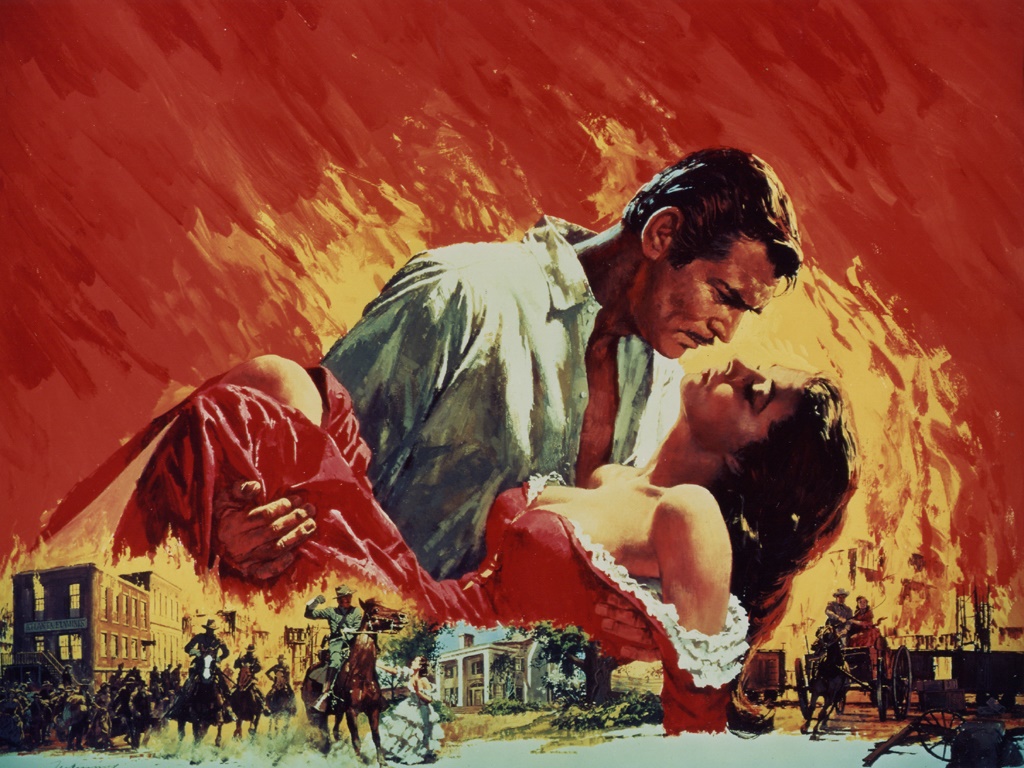
This book came highly recommended to me by a friend who loved classics. The story is a historic romance set during the American Civil War. It follows the life of the young and beautiful Scarlett O'Hara and the scandalous but irresistible Rett Butler. What I loved so much was the way Mitchell combined an epic romance with the hardships and reality of the American Civil War. It's not the soppy romance we see so often today but a love-hate relationship between two people struggling to survive in a changed world.

2. Earth's Children by Jean M. Auel


This series had to be in my top ten because it combines one of the most detailed pieces of historical research with a fascinating fictional storyline. The series follows the life of Ayla, a young woman living 30,000 years ago in the Upper Paleolithic era. An orphan raised by Neanderthals, Ayla eventually embarks on a journey of self-discovery and survival that leads her back to her own people. Auel takes us back to our roots and creates a possible reality of how our ancestors might have lived and evolved.


3. Millennium Trilogy By Stieg Larsson


The Millennium Trilogy has to be the best crime/thriller series out there. Based in Sweden the trilogy's protagonists are the unique punk chick Lisbeth Sander and journalist Mikael Blomkvist. The series has strong underlying theme of abuse and violence against women and with such an original character found in Lisbeth Salander I could not put it down. Even if you don't usually read crime novels I urge you to try reading this series.


4. Harry Potter series by J.K. Rowling


Anyone who hasn't heard of the Harry Potter series by now must lead the life of the caveman. I think almost everyone knows of Harry Potter, the boy who lived, and his struggle against the most powerful dark wizard to have ever existed, Lord Voldemort. The first book in the series was given to me as a ninth birthday present and I have been hooked ever since. Yes, I was one of the people who went and got the book the first day it was released and then stayed up all day and all night reading it. Perhaps the most famous series of our time, even if you've seen the movies, its definitely a must to read.


5. The Lord of the Rings by J.R.R Tolkien


Without a doubt the best epic-fantasy book I have read and probably will ever read, The Lord Of The Rings is a masterpiece of writing. English philologist J.R.R Tolkien thrusts his readers into the world of Middle Earth where the Dark Lord Sauron is seeking his Ring of Power. The fate of the land coincidentally comes into the hands of a young hobbit named Frodo Baggins who must destroy the ring. The characters in Lord Of The Rings stayed with me long after I had turned the last page and though it is not the sort of book one can 'devour' in a few sittings it's so rich in detail, ideas and symbolism its impossible to leave.

6. Dry Water by Tammie Matson


Tammie Matson is the sort of zoologist I aspire to be and so her biography of her experiences in Africa were an unforgettable and moving read for me. Tammie took her first trip to Africa with her father at the age of fifteen and immediately fell head-over-heels in love with the continent. Her biography is funny, moving, fascinating and insightful and because of my love for Africa and its wildlife I couldn't stop reading it. If you're not an aspiring zoologist or wildlife lover it may not be your cup of tea but it made quite an impact on my life.


7. Pride and Prejudice by Jane Austen 

I actually saw the movie Pride and Prejudice, starring Kiera Knightly and Matthew Macfadyen, before I read the book. Being a fan of historical costume dramas I loved the movie so much I decided to give the book a try. I had heard from some people that it was a difficult read because it was written at the beginning of the 18th century. I did not find this the case. Perhaps because I already knew much of plot I found it, not a quick read, but not hard. I love this classic romance and particularly the strong-headed character of Elizabeth Bennett.


8. On Writing by Steven King

Whether you're an aspiring writer or just someone who likes biographies this is a fantastic read. Stephen King is one of the best known American novelists around, having spouted out dozens of bestselling novels. In his memoir On Writing, King deals out writing advice as well as some highly amusing and also personal memories. It certainly helped inspire me with my writing.


9. To Kill a Mockingbird by Harper Lee


I read this book in Year 11 English and at first I was not particularly impressed by it. It was not until we discussed it in class and I got some background to the story that I began to appreciate what a phenomenal piece of writing it is. To Kill a Mockingbird is seen through the eyes of Scout, a young girl growing up during the Great Depression. Its main theme is centralized around racial injustice and it shocked me as a sixteen year old to read of how American Negroes were treated. It is a work that reveals America's dark past, its class divisions, racial divisions and struggle through a time of great hardship.


10. The Power of One by Bryce Courtenay


Bryce Courtenay is an African born white man and his novel The Power of One is based on many of his experiences growing up during the Apartheid. Though not a biography many of the scenes written in the book are inspired by Courtney's own life experiences. I found the Power of One an uplifting read and an insight into the African Apartheid which I had known very little of.

Friday, 4 May 2012

The Dictator Tackles Today


As you may or may not know Sacha Baron Cohen arrived in Australia a few days ago. This time he has come in the guise of Admiral General Aladeen to promote his upcoming movie, The Dictator. Already he has created a stir with comments involving Julia Gillard and a sex change, 'Slippery slipper." and even calling the female presenter on the Today show 'sugar tits'. I watched his interview on the Today show and once again he does enough crude jokes to make me both offended and in stitches at the same time. He is certainly an entertainer. The interview is below for those who wish to watch it.


Now I am happy to admit that I have seen two of Sacha Baron Cohen's previous movies, both Borat and Bruno, and perhaps a little guiltily I will admit I found them both highly entertaining. Though the humour is often crude and the scenes can sometimes leave you going, "what the?!" he is undoubtedly one funny guy. For those who don't like him, all I can advise is that he is a comedian. Its his job to pay out anyone and everyone so go with it rather than get offended.

His latest movie The Dictator will be in cinemas on May 15 and tells 'the story of a dictator who risked his life to ensure that democracy would never come to the country he so lovingly oppressed' (Wikipedia 2012)


Monday, 30 April 2012

Lecture 9 - News Values

What makes a headline in the news? Why are some stories given more attention than others and seen to be more important news? "If it bleeds it leads" is a quote heard many times to describe common top news stories. What makes people so interested in these stories of war, murder and tragedy? In our week nine lecture we discovered the values of news stories that make a big splash as opposed to a tiny ripple. News values as defined by Wikipedia is 'how much prominence a news story is given by a media outlet, and the attention it is given by the audience'.

News Values:
1. Impact - shock or 'wow' factor
2. Audience identification - interests people
3. Pragmatics - Ethics, practicality, current affairs
4. Source Influence - PR (press release)

These four values seem a good starting point for deciding what story to place at the beginning of TV news or a newspaper. If we look at the headline news for today of the Brisbane Times the two major stories I found were:
  1. The ongoing investigation into the murder of Brisbane mother-of-three Allison Baden-Clay
  2. The win of Graham Quirk for Brisbane mayor in last weekend's election
The first story fits the quote "If it bleeds it leads" quite perfectly and if we look at its news values it has all four mentioned above. Because it is a murder it carries the 'shock' factor, and audiences identify with it particularly because it has happened here in Brisbane. The investigation has been going on for thirteen days in which police have conducted press releases and kept the story an ongoing affair. The injustice of the killing of a loved mother-of-three is enough to get anyone a little teary.We can certainly see that this story fits with the news values above.

Graham Quirk as the new Brisbane mayor hasn't the 'wow' factor compared to the first story but it is certainly of great importance to the people of Brisbane and a recent affair.

News values have changed and varied over time and were not always those ones shown above. In the lecture we looked at several people's theories as to what makes a story newsworthy. Galtung and Ruge were among the first to come up with a set of values to explain what made headlines. Below are their twelve suggested values.


Galtung and Ruge's three hypothesis:

Additivity Hypothesis -  The more factors an event satisfies the higher probability it becomes news
Complementarity Hypothesis - The factors will tend to exclude each other
Exclusion Hypothesis - Events that satsify few or none of the factors will not become news


Golding and Elliot  added their thoughts in 1979 with some interesting additions:
  1. Drama
  2. Visual attractiveness
  3. Entertainment
  4. Importance
  5. Size
  6. Proximity
  7. Negativity
  8. Brevity
  9. Recency
  10. Elites
  11. Personalities

O'Neill and Harcup have narrowed Galtung and Ruge's intial newsworthiness ideas down to ten suggestions.


Though the 'newsworthiness' of a story has clearly changed over time and even varies from person to person I think we can see some key similarities between them all. Values appear to change rungs on the list rather than appear and disappear entirely. On one of that last lecture slides it was written, 'what do you think is newsworthy?' In my opinion O'Neill and Harcup's version of newsworthiness is the best model and it should be noted that this also is the most modern model I have posted and so relates best to today's news media.

Here is my list in descending order of what I think the news values of today are:
  1. Impact/ Magnitude - Who and how many people it effects
  2. Importance - Stories that are relevant to the audience
  3. Proximity - How close it is to the audience
  4. Recency - How recent the story is 
  5. The Elite - Concerning the powerful, influential
  6. Surprise - A stories shock value
  7. Entertainment - How much it entertains
  8. Celebrity - Stories about the famour
  9. Negativity - Conflict and tragedy
  10. Good News - Positive overtones that make the audience feel good

Thursday, 26 April 2012

Factual Storytelling: A Change Of Country, A Change Of Life


A Change Of Country, A Change Of Life

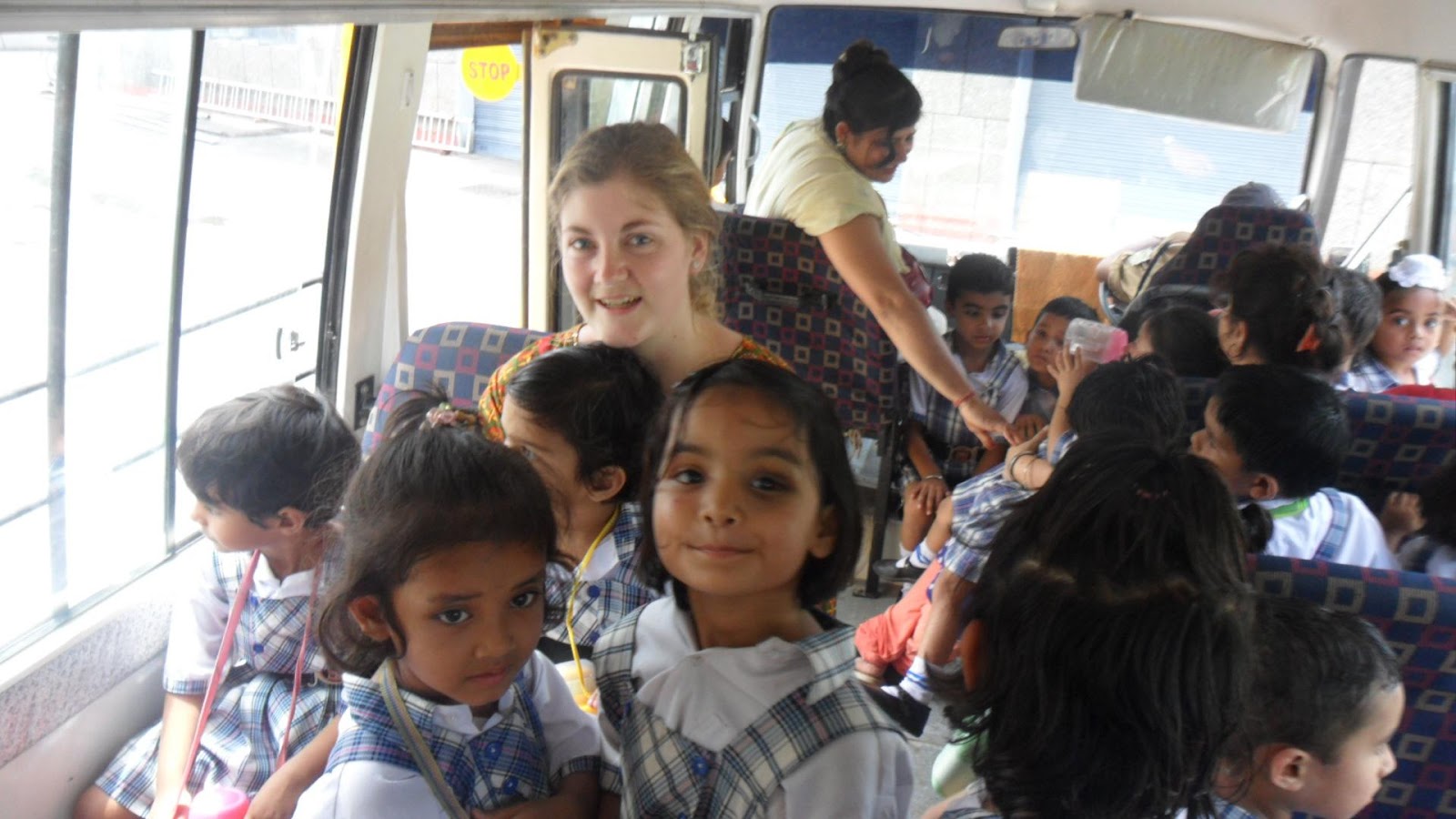
I've now been back at home longer than I was away. For the most part I've been very happy ever since returning to Australia and I haven't devoted much thought or time to remembering my five months in India. But looking back on photos I start to miss my Indian home: the people, the places, the food, the adventure. India was by no means an easy place to live, how could it be with over a billion people crammed in like sardines? But it was the story of a lifetime.

I signed up to Lattitude Global Volunteering halfway through Year 12 when exams had my nerves stretched to breaking point. Sitting at my computer day after day I would dream about the adventure that awaited me if I just got myself through my final year of school.

It seemed to take forever, but eventually the day dawned when it was time to leave. My mum and dad kissed me goodbye and before I knew it I was on my own, heading off to one of the poorest, craziest countries in the world. I began to wonder what I'd let myself in for.

When people ask me, “how was India?” I find it very difficult to answer. Everything that could be said about India, the opposite is also true. My trip was both wonderful, and horrible. There were times I laughed so hard I couldn't breathe and there were times I wanted to curl up in a ball and know it was over. It is a country of contrasts. You can walk down the street and see a man as fat as a walrus walking past a man whose body is wasting away to nothing.

I taught English at a middle class school called Olympus High. Every afternoon I would also go and help out at a slum school a few kilometres down the road and these kids had nothing but the borrowed uniforms on their back. In contrast to the kids at Olympus they were skinnier, less confident, and their school books were carried in plastic bags. But their enthusiasm to learn was unparalleled. Though their English was much poorer they were the best students I have seen in any school anywhere in the world. I taught them songs, showed them videos of Australia and its wildlife and every afternoon as I left the little room where I taught them I felt a warmth inside me and a sense of pride for what I was doing. To know that I was helping these kids get an education and make something of themselves was an indescribable feeling. Its the most rewarding thing I've ever done.
 
As the months rolled by I grew to love and hate India almost equally. The pollution was almost unbearable. It clung to my skin, made my eyes yellow, my snot black and my hair fall out. Hygiene was basic and I found the reactions of my friends and family back home funny when I told them I used squat toilets and washed out of a bucket of cold water. There was no water for washing hands, mosquitoes woke me up almost every night, and sometimes it was even too hot to sleep. It was these times I knew I was a long way from home, but I always felt grateful for the experience. To experience life in a much less privileged place, where people never complained about their situation left me feeling quite humbled.


I slept in a dormitory with twelve of the boarding children at Olympus High. We woke at six o'clock every morning (except Sundays), got ready for school, had a breakfast of chai and rusk (a sort of bread), attended/taught classes, ate lunch, and finished school for the day. After school the children had sports activities and they spent their evenings studying, only stopping for dinner. The dedication the Indian children showed to their school work would put Aussie kids to shame. Eight and nine year olds spent four to five hours a day doing after-school work. I truly came to love these kids and the staff who ran the dormitory. They are the best of India and what I miss the most.

I can remember wanting to cry when I saw the yellow sands of Australia from my seat on the plane. My country was so pristine and clean. Driving home was surreal. There were no people walking beside the road, no three-wheeled rickshaws or constant beeping horns, no rubbish, and no crazy drivers. The moon was white, not the hazy yellow I had become accustomed to seeing through the smog. I now know how lucky I am to live where I do.


I wish everyone could have as eye-opening experience as I did. It changed my perspective on life forever and gave me an appreciation I never had before. I grew up in India; I left still a child and came back an adult. In India I discovered how strong I really am, what I am capable of and what the world has to offer. Looking back at photos of my time there, it was the most rewarding thing I've ever done and it has helped make me who I am today.


Monday, 23 April 2012

MEAA Code of Ethics

After the Ethics Lecture I was interested to find out more about Media, Entertainment & Arts Alliance Code of Ethics. I visited their website: http://www.alliance.org.au/code-of-ethics.html

Below is the Media Alliance Code of Ethics. I think it is very important that all journalists read this as we will be confronted with many ethical issues in our jobs. There are far too many breaches of ethics in advertising, entertainment and storytelling and by reading this we may avoid falling into some of them.

NOTE: The following is pasted directly from the website mentioned above.

Media Alliance Code of Ethics

Alliance LogoRespect for truth and the public's right to information are fundamental principles of journalism. Journalists describe society to itself. They convey information, ideas and opinions, a privileged role. They search, disclose, record, question, entertain, suggest and remember. They inform citizens and animate democracy. They give a practical form to freedom of expression. Many journalists work in private enterprise, but all have these public responsibilities. They scrutinise power, but also exercise it, and should be accountable. Accountability engenders trust. Without trust, journalists do not fulfil their public responsibilities. Alliance members engaged in journalism commit themselves to
Honesty
Fairness
Independence
Respect for the rights of others
1.  Report and interpret honestly, striving for accuracy, fairness and disclosure of all essential facts.  Do not suppress relevant available facts, or give distorting emphasis.  Do your utmost  to give a fair opportunity for reply.
2.  Do not place unnecessary emphasis on personal characteristics, including race, ethnicity, nationality, gender, age, sexual orientation, family relationships, religious belief, or physical or intellectual disability.
3.  Aim to attribute information to its source.  Where a source seeks anonymity, do not agree without first considering the source's motives and any alternative attributable source.  Where confidences are accepted,  respect them in all circumstances.
4.  Do not allow personal interest, or any belief, commitment, payment, gift or benefit, to undermine your accuracy, fairness or independence.
5.  Disclose conflicts of interest that affect, or could be seen to affect, the accuracy, fairness or independence of your journalism.  Do not improperly use a journalistic position for personal gain. 
6.  Do not allow advertising or other commercial considerations to undermine accuracy, fairness or independence.
7.  Do your utmost to ensure disclosure of any direct or indirect payment made for interviews, pictures, information or stories.
8.  Use fair, responsible and honest means to obtain material.  Identify yourself and your employer before obtaining any interview for publication or broadcast.  Never exploit a person's vulnerability or ignorance of media practice.
9.  Present pictures and sound which are true and accurate.  Any manipulation likely to mislead should be disclosed.
10.  Do not plagiarise.
11.  Respect private grief and personal privacy.  Journalists have the right to resist compulsion to intrude.
12.  Do your utmost to achieve fair correction of errors.

Guidance Clause
Basic values often need interpretation and sometimes come into conflict. Ethical journalism requires conscientious decision-making in context. Only substantial advancement of the public interest or risk of substantial harm to people allows any standard to be overridden.

Lecture 8 - Ethics

Ethics was the topic for this week's lecture and was taken by guest speaker John Harrison. I found this week's lecture particularly fun as it was interactive and involved looking at a lot of different advertisements, both pictures and videos. We were asked to decide on each advertisement whether we thought it was ethical or unethical and whether it was tasteful or tacky. Here were my opinions:

Outdoor 1 - Tasteful, Ethical
Outdoor 2 - Tacky, Unethical - Gender stereotyping
Outdoor 3 - Tacky, Ethical
Outdoor 4 - Tasteful, Ethical
Outdoor 5 - Tacky, Unethical - Not about shoes, very sexual

TV 1 - Tasteful, Ethical - Word 'bloody' made it banned in UK
TV 2 - Tasteful, Ethical
TV 3 - Tacky, Ethical - Banned in NZ because of the word 'bugger'
TV 4 - Tacky, Unethical - Racial stereotypes
TV 5 - Tasteful, Ethical

Overall I would say the advertisement that I had the most problem with was actually TV 4. The comments made by Sam Kekovich stereotyped Australian's in a very offensive way and I find the advertisement both tacky and unethical. Get out of Australia if you're a vegetarian hippy? I am not a vegetarian or hippy but I found those words in particular very unethical.

John Harrison talked about what makes something good or bad? When and how is that decided? There are three ethical theories.

1. Deontology
Judges the morality of an action based on the action's adherence to a rule or rules

2. Consequentialism
Doesn't matter what you do as long as the outcome is 'right'
The end may justify the means
The greatest good for the greatest number

I personally could not agree with this second theory as I believe the way something is done matters a lot. The end does not always justify the means nor is the greatest good for the greatest number make something right. The last theory is the one I agree most with as does John Harrison.

3. Virtue - HIS CHOICE
'Goodness' comes from good habits of character
These habits are virtues eg, courage, justice, temperance, prudence
These are the 'golden means' of behaviour

By using virtues to decide if something is right or wrong I believe we get closest to an outcome that is both ethical and achieved in a good manner. It relies on individual's character to know what is right and wrong, not a set of rules put down. If journalist's and the media use courage, justice, temperance prudence in their judgement the content is most likely to be ethical. Of course the only problem with this is that individual's will have their own opinion as to what 'justice' and other virtues might be but on the whole I thin this is the best of the three theories.


Thursday, 19 April 2012

Kony 2012 - Cover The Night

The attention on the Kony 2012 campaign has dropped considerably since its release on 5th March. There has been very little said about it for a while now, even the release of its second video barely made a headline. Tonight though, is the date that has been set by the group Invisible Children to raise as much awareness of their campaign as possible. This time not via the internet, but physically in the form of putting up posters and signs everywhere of 'Kony 2012'.

Will they carry it off? I will be very interested to find out tomorrow morning. I wonder just how many people were convinced to buy the awareness packages they promoted on their two video releases. When I watched the first video I was definitely moved and right on board with them to catch Joseph Kony, but something held me back from going that bit further and purchasing the packages. Was I one of few or one of many?

Today I also watched the second video (above in case you haven't yet!) made by the Invisible Children in which they emphasized a little more on the actual whereabouts of Joseph Kony (which was a criticism from their first video) and what changes were beginning to take place. The big question is of course, are we actually any closer to catching Joseph Kony after all this 'awareness'? In my opinion, not really. Barack Obama may have signed some papers, perhaps more men are being assigned to hunt down  the LRA but this guy is still out there, still free. He has apparently kidnapped over fifty more people since the first video. The second video was good though, addressing some of the criticisms put upon the first one and going into more detail, showing facts, people and plans.

As a journalism student I have found this whole campaign interesting to watch as it unfolds. As has been said before, something of this magnitude has never been done before, using digital media to reach so many people around the world and receiving such a strong response. I wish the Invisible Children all the best with their busy night ahead!!

Tuesday, 17 April 2012

HOW TO LOSE WEIGHT FAST, through the nose?

Reading the news today I came across one of the latest diet fads to hit the market. Every new method I read or hear about seems crazier than the last but this one just about takes the cake. Eating through a nasal tube! This idea may seem pretty extreme and a little gross but many brides to be are trying this 'crash diet' method to lose 5-10 kg before their big day. Women follow this 'diet' for about 10 days in which they consume a mere 800 calories per day, less than half of what most people should eat in a day!

Basically its just another stupid starvation diet that does more damage than good in the long run. In a world where time is short and people don't have the time or can't be bothered to live a healthy lifestyle these sorts of weight loss methods continue to emerge, each one seeming more ridiculous and more unhealthy than the last.

Have you heard
of these?

The Cabbage Soup diet - Eating nothing but cabbage soup for seven days

Grapefruit diet or Hollywood diet - A high protein, low carb diet that incorporates half a grapefruit with every meal eaten. It is claimed that grapefruit has a fat burning enzyme that will burn calories in high fibre foods. This diet is taken in 12 day intervals, with 2 days off in between.

The Blood Type Diet - This diet claims that according to a person's blood type they need to eat different foods. The evidence behind this is very limited

And finally.... The Lemon Juice diet or Master Cleanse. With this diet no food is allowed to be consumed just herbal tea and lemon water. With a diet like this of course you're gonna lose some weight! Its pure starvation!! Click on the link below to watch Current Affairs expose on this infamous diet used by many Hollywood stars.
http://www.youtube.com/watch?v=7006mQQ0Y0w&feature=player_embedded#!


Lecture 7 - Public Media

Lecture 7 was about the public media with particular emphasis on the two main players in Australia: ABC and SBS. For the first ten years of my life the only TV I ever watched was ABC because that was the only channel we picked up (I lived out in the country). I can still remember the first few weeks when we got the other channels like Ten, WIN, Seven and SBS. My mum used to get so annoyed at all the adds. Over time of course my family gradually began to watch more of the commercialized stuff and nowadays we watch ABC a lot less (though this may also be because I'm no longer a kid!) except the odd science program or Australian Story. I do however believe that the ABC and SBS show far more important material than any of the commercial channels and their value to society is far greater.

In the lecture we discovered that public media's main goal is to serve and engage the public. Because it is not driven by the need to create profit the material it gives us is very different. It allows for minority groups, supports the public and democratic processes and has no other vested interest other than its main goal. One of the big questions raised was, if public media isn't funded by advertisers then where does it get the money to function at all? The answer: it is owned by us, the public!

Now I have heard many people say they never watch ABC or SBS because they find it boring. Maybe for a lot of young people reality tv shows, and American sitcoms are more entertaining but surely there must come a time when everyone gets sick of this sort of stuff and wants something they know is real. I think that  this is what makes public media so special. Because it has no agenda it goes where other media doesn't. It was the ABC that brought us the story of exported cattle that created such an upheaval across the country. When stories like these break, stories that have real meaning and get people up and talking and protesting we can see the importance of public media.

I think it is important to note that while commercial media is all about showing us what we want to see most, public media often shows us what we need to see most. I believe both serve a vital purpose in society and have an important role to play. When I think about the different channels I watch, it is a hefty mix of both types and I enjoy both equally for different reasons. But my respect for the public media channels is much greater and I would love to one day join one of them as a journalist!